Patented Patient Communication Technology
A Smarter Way to Communicate Critical Patient Information
Simplify workflows and support safer care with our all-in-one patient communication system. One sign, clear information, tamper-resistant design.

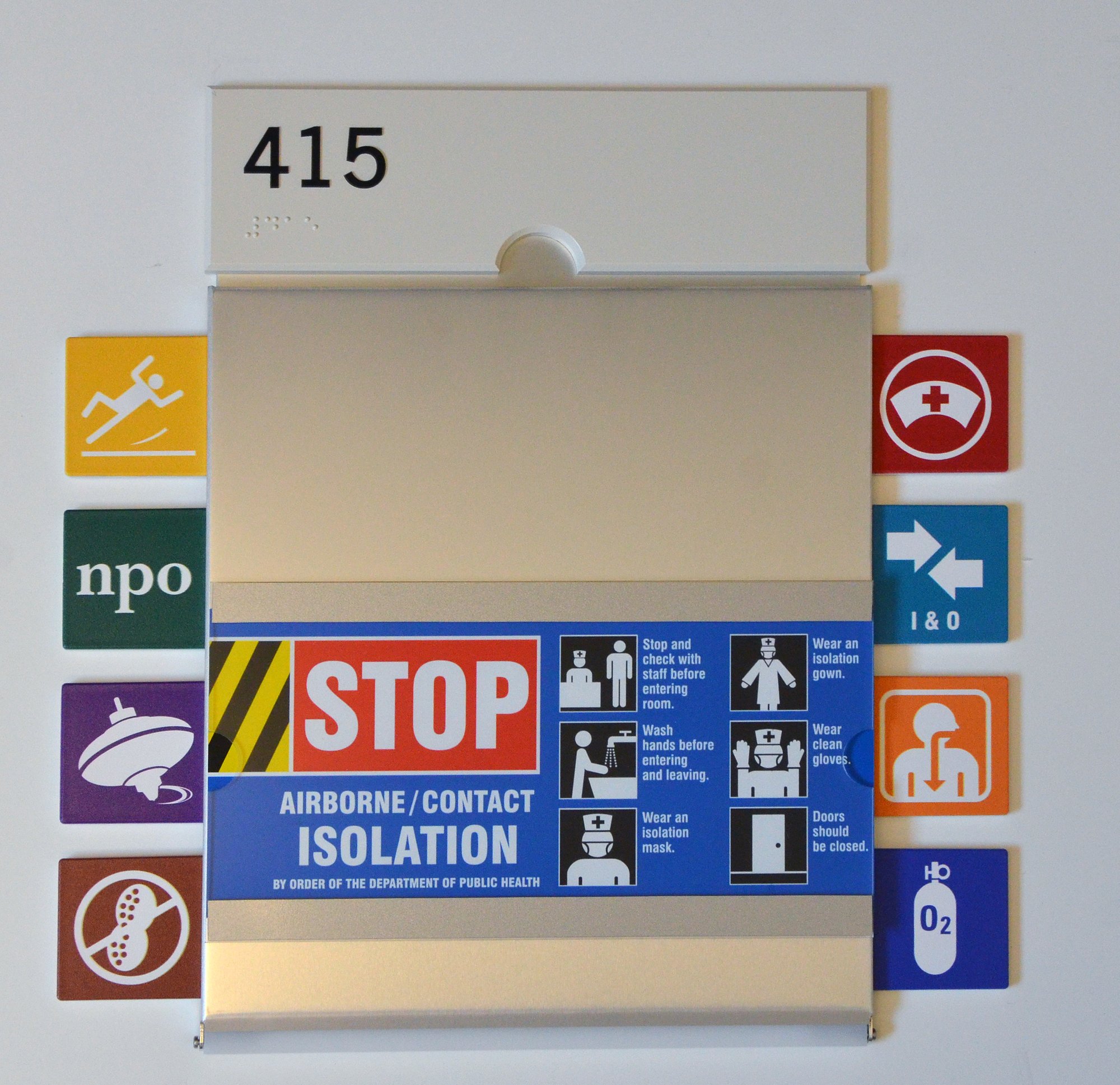
8-Icon PCS model, room number and ADA compliant braille, with acrylic window and full set of (4) double side isolation inserts
fully customizable isolation insert sets to be housed within sign - disinfect and cleaner friendly, built for a healthcare environment
Customized to Your Facility
Headers & Branding Options
Match your facility's brand. Custom headers, colors, logos, and finishes integrate seamlessly.
Comprehensive Icon Library
Standard library or custom icons. Tailor icon sets to specific departments, units, or care protocols.
Multiple Format Configurations
Fit any space. Standard, SlimLine, and Dual Occupancy formats with varying icon counts.
Testimonials
Don't just take it from us, hear directly from nursing and healthcare staff
Gallery
More Than a Sign: A Protected Communication System
Four key differentiators that make the Patient Care Sign the only patented solution.
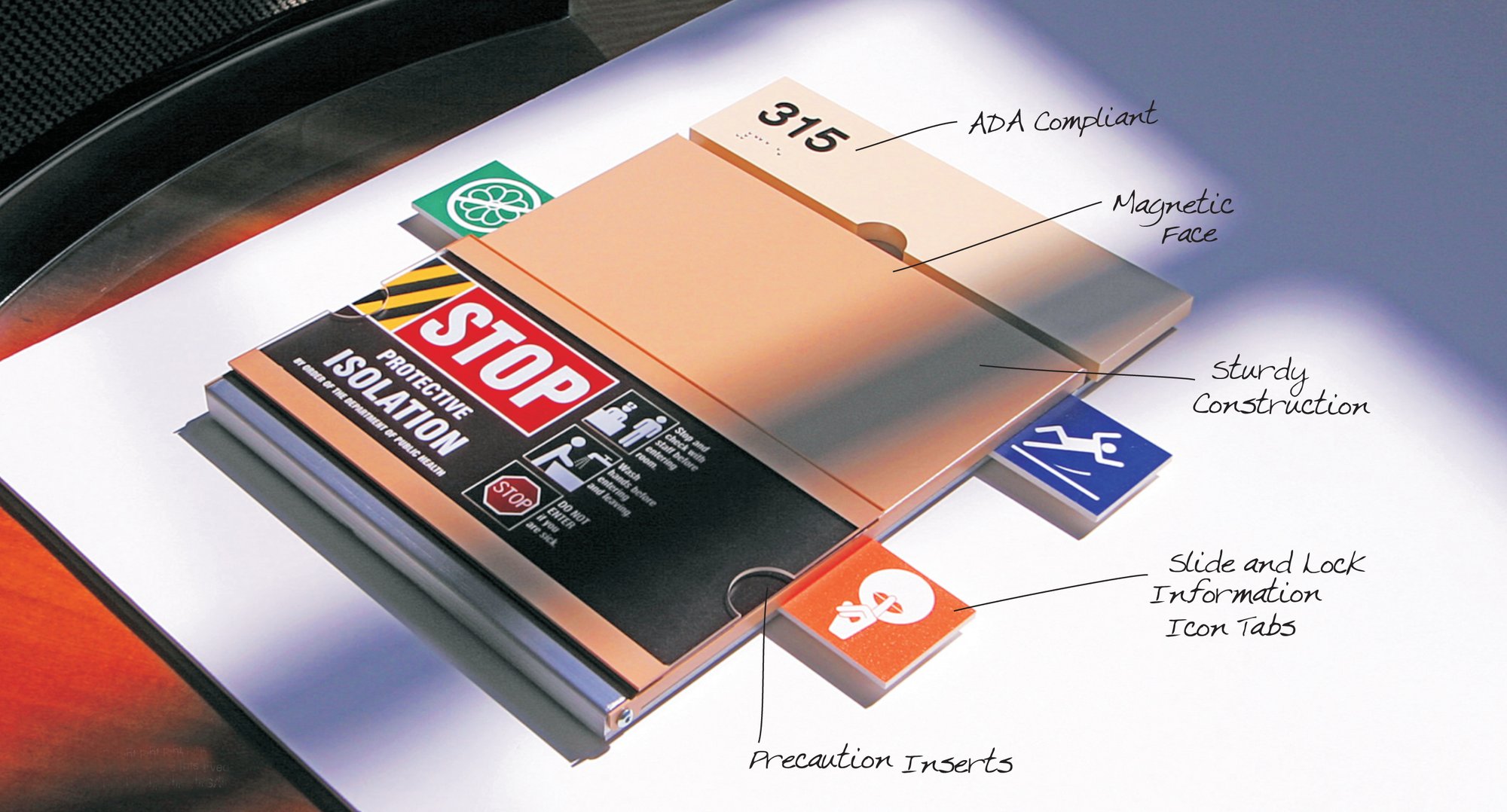
Tamper-Resistant by Design
Icons lock securely into place, preventing accidental or intentional changes.
Patent-Protected Technology
L&H holds the patent on this locking icon system. We're the only licensed provider.
One-Handed Operation
Every interaction—opening, changing icons—can be done with one hand. Supports efficient workflows.
Built for Healthcare Standards
Injection-molded, disinfectable components. ADA and HIPAA compliant. Built for clinical environments.
Facility Branding and Customization
Custom headers, logos, and colors. Integrate seamlessly with your facility branding.
Multiple Configurations
Standard, SlimLine, and Dual Occupancy formats. Multiple icon-tab counts available.
Custom Icon Sets
Comprehensive standard library or create custom icons. Tailored to your care protocols.
Compliance and Outcomes
Supports National Patient Safety Goals. Reduces HAIs. Improves HCAHPS scores.
Frequently asked questions
What configurations does the Patient Care Sign come in?
The Patient Care Sign is available in multiple configurations: Standard (8, 10, or 12 icon tabs), SlimLine (4 or 8 icon tabs for limited wall space), and Dual Occupancy (16 icon tabs for shared rooms). Each can be ordered with or without custom headers, and all include the infection control insert window.
How does the Patient Care Sign improve patient safety?
The Patient Care Sign addresses a critical communication gap by replacing handwritten notes, magnets, and improvised solutions with a standardized, tamper-resistant system. It reduces visual clutter, ensures room-to-room consistency, and displays critical patient information—such as fall risk, isolation status, and special precautions—clearly outside each room, improving staff awareness and patient safety outcomes.
Can the Patient Care Sign be customized for our facility?
Yes. Every Patient Care Sign program is fully customizable to align with your facility's standards, branding, and operational needs. You can select custom header shapes, colors, logos, and typography; choose from our comprehensive icon library or create department-specific icons; and design branded infection control inserts that match your system-wide protocols and color-coding standards.
Does the Patient Care Sign meet healthcare compliance standards?
The Patient Care Sign is ADA and HIPAA compliant, supports National Patient Safety Goals, and is built to healthcare standards with injection-molded, disinfectable components designed for long-term durability in clinical environments. It combines room identification, patient status communication, and infectious disease placards in one standardized system, helping reduce hospital-acquired infections and improve HCAHPS scores.
What makes L&H Companies the authority on this technology?
L&H Companies holds the patent on the locking, interchangeable icon system used in the Patient Care Sign, making us the only licensed provider of this specific technology. Our tamper-resistant design prevents patients and visitors from altering critical information, while one-handed operation supports efficient workflows—features developed directly from observing how nurses communicate throughout their shifts.